
Medical Supplies
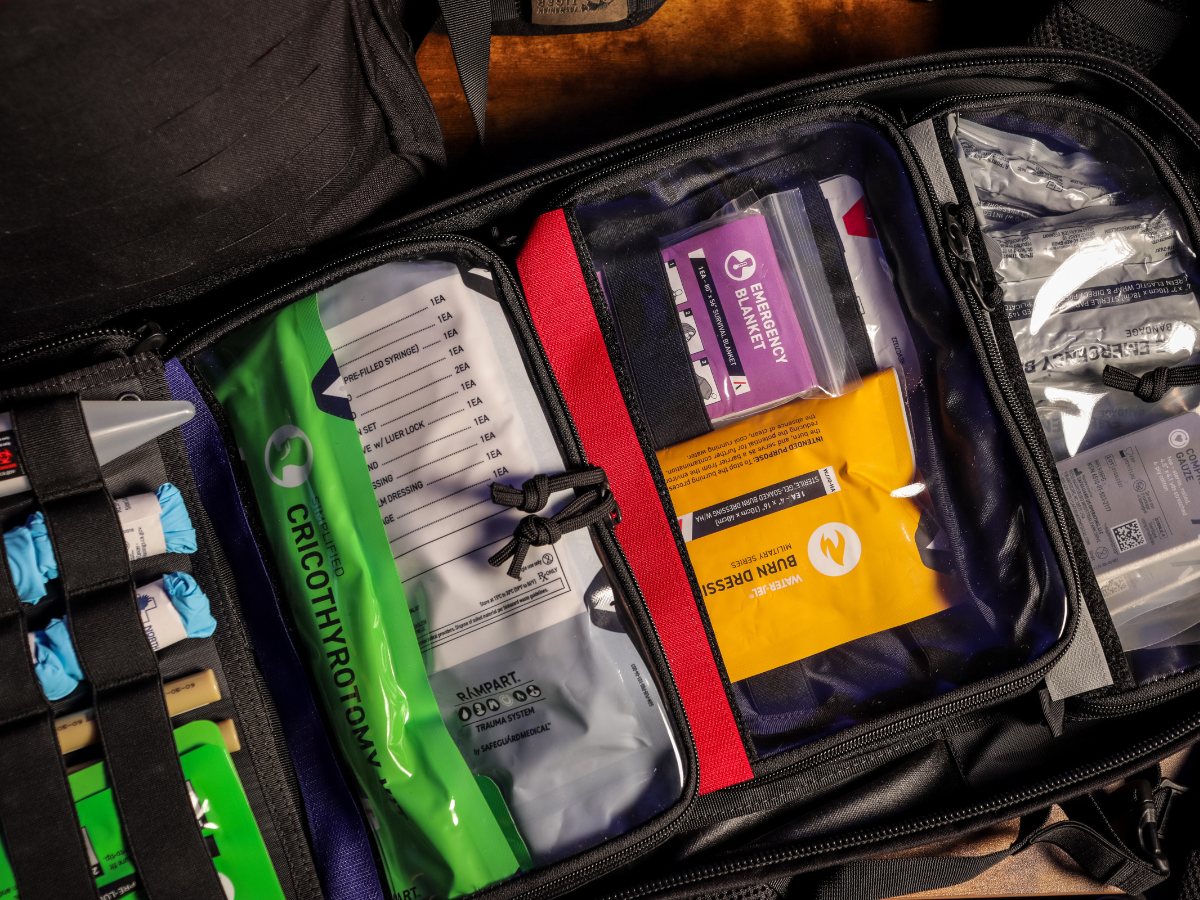
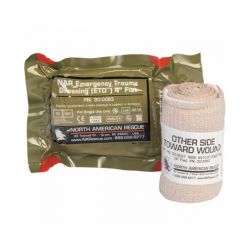
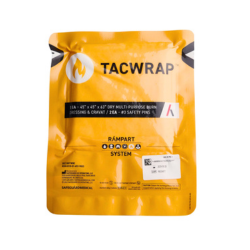
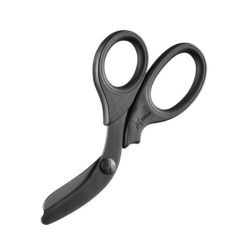
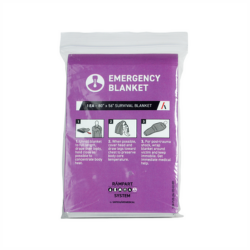
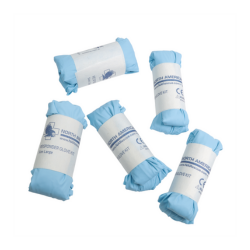
Tactical medical supplies give military personnel, law enforcement officers, EMS providers, and prepared civilians the tools to treat life-threatening injuries before advanced care arrives. Severe bleeding, airway compromise, and chest trauma are the leading causes of preventable death in both combat and civilian emergencies, and the equipment used to manage them is designed for one job: keeping a casualty stable until help arrives. Whether stocked in an aid bag, staged in a vehicle, or carried on a duty belt, individual medical supplies are the foundation that every kit is built from.
Here you'll find tourniquets, pressure bandages, compressed and hemostatic gauze, chest seals, nasopharyngeal airways, decompression needles, burn dressings, splints, trauma shears, and hypothermia management supplies. You'll find equipment from established manufacturers such as North American Rescue, Safeguard Medical, TacMed Solutions, Celox, QuikClot, and 6:8 Medical, the same suppliers that equip military units and EMS agencies. These products support everything from single-patient bleeding control to mass casualty response and routine resupply of existing kits.
When comparing options, start with training and doctrine. Supplies organized around the M.A.R.C.H. sequence (Massive hemorrhage, Airway, Respirations, Circulation, Hypothermia) match how Tactical Combat Casualty Care is taught, and CoTCCC-recommended devices have been evaluated for prehospital use. Pay attention to sterility and expiration dates, since most trauma supplies are single-use and should be rotated on a schedule. Packaging matters as well: vacuum-sealed, flat-folded dressings save space in a kit, and tear-notch packaging can be opened with gloved or wet hands. For hemostatic products, the active agent, such as kaolin or chitosan, affects how the dressing is applied and how long pressure must be held.
Individual supplies work best as part of a complete system. Pre-built IFAKs and medical kits provide organized loadouts for common scenarios, medical pouches and bags keep supplies protected and accessible, and training equipment builds the skills needed to use this gear effectively.
- Product
- Qty in Cart
- Quantity
- Price
- Subtotal
-


SOG
$79.95Trauma Shears That Can Do More A focused multi-tool designed specifically for first responders, ParaShears come complete with a mission-specific toolset that features 11 components, including...$79.95Qty in Cart: 0Price:$79.95Subtotal: -

Mayday Industry
$75.95All four colors used in triage. This adhesive tape can be used to mark out triage areas – used around the waist or arm of the victim to indicate the extent of the injury. Colors: Yellow, Green, Red...$75.95Qty in Cart: 0Price:$75.95Subtotal: -


Safeguard Medical
$6,852.95Recognized for its superiority over prevailing warmers in the recently released CoTCCC ARC Guidelines, the Warrior and the Warrior EXTREME are the only portable warmers capable of warming...$6,852.95Qty in Cart: 0Price:$6,852.95Subtotal: -


Safeguard Medical
$5,850.00Recognized for its superiority over prevailing warmers in the recently released CoTCCC ARC Guidelines, the Warrior EXTREME is a high performance warming system that uniquely meets blood and IV fluid...$5,850.00Qty in Cart: 0Price:$5,850.00Subtotal:
A first, foundational trauma kit typically starts with a tourniquet, hemostatic gauze, a chest seal, a pressure bandage, and gloves, the core items built around the M.A.R.C.H. sequence taught in tactical medicine. Beyond that starting point, this page also covers supplies for less common but still serious situations, like burn dressings, splints for a fracture, and airway adjuncts for someone who can't protect their own airway. Most people don't need every item on this page, but knowing what each one treats makes it easier to prioritize what actually belongs in a personal kit.
Tactical medicine is the practice of treating trauma in a hostile or resource-limited environment, developed originally for combat casualty care and increasingly adapted for law enforcement, EMS, and civilian use. It prioritizes the injuries most likely to cause preventable death first, using the M.A.R.C.H. framework (Massive hemorrhage, Airway, Respirations, Circulation, Hypothermia), rather than treating whatever injury looks the worst. The gear on this page, from tourniquets to chest seals, reflects that same approach: compact, fast to apply, and built for treating the specific injuries that kill quickly.
A standard first aid kit is built around everyday injuries: cuts, scrapes, blisters, and minor burns that aren't immediately life-threatening. Tactical medical supplies are built for trauma that can kill within minutes if untreated, like severe bleeding, a collapsed lung, or an airway that's no longer clear on its own. That difference shows up in the gear itself: a tourniquet, a chest seal, or hemostatic gauze doesn't have an equivalent in a standard first aid kit, since those situations fall outside what a basic kit is designed to handle.
Yes, and more than most people expect. If you're ever actually using this gear, something has gone seriously wrong, and the stress of that moment degrades fine motor skills, decision-making, and memory even for people who know the material well. Training turns a skill into something closer to automatic, which matters when adrenaline is working against you. Some items, like a nasopharyngeal airway or a decompression needle, should only be applied by EMS personnel or someone with specific hands-on training in that skill, since improper use carries real risk beyond just not helping. Our training section covers options for building those skills before you need them.
Good Samaritan laws exist in some form in all 50 states, generally protecting someone who voluntarily provides emergency care in good faith from being held liable for unintended harm, as long as they aren't grossly negligent or reckless. The exact protections and requirements vary by state, so it's worth knowing the specifics of where you live rather than assuming the same coverage everywhere. We're not attorneys, so treat this as a starting point rather than legal advice, and look up your own state's statute if you want the specifics.
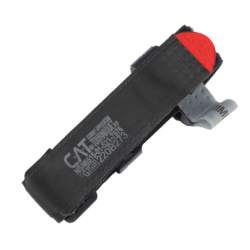
North American Rescue Combat Application Tourniquet (C-A-T) GEN 7
The most widely carried windlass tourniquet on the market and the Official Tourniquet of the U.S. Army since 2005, tested by the Army's Institute of Surgical Research to be 100% effective at stopping blood flow in both upper and lower extremities. The Gen 7's single routing buckle speeds up application and cuts down on wasted motion, and the signature red tip gives a visual cue that it's been applied correctly.
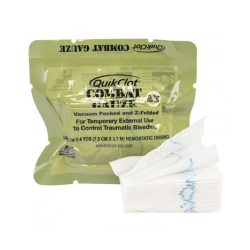
Needs only about 60 seconds of compression to stop severe arterial bleeding, compared to the 3 minutes required by standard combat gauze. Its chitosan-based formula works independent of the body's own clotting cascade, so it stays effective on patients who are cold, in shock, or on blood thinners. It's on the CoTCCC list for hemorrhage control.
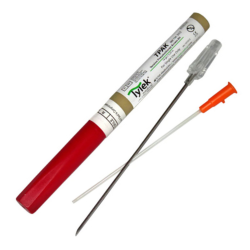
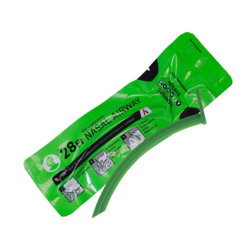
Safeguard Medical Pre-Lubricated Nasopharyngeal Airway
A 28 French NPA with a pre-lubricated, beveled tip built to maintain an open airway in a conscious or unconscious patient who can't protect it on their own. Being pre-lubricated means it's ready to insert without needing a separate lubricant packet. This is an advanced airway adjunct that should only be applied by EMS personnel or someone with specific hands-on training in NPA insertion.
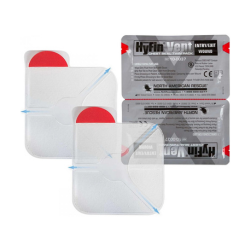
Built to address tension pneumothorax, a leading cause of preventable death from a penetrating chest wound, by venting trapped air and blood while keeping the seal in place. The 360° adhesive is designed to stay stuck in sweaty, wet, or hairy conditions where lesser seals tend to peel, and the transparent design lets you monitor the wound without lifting the seal.
Transparent, so you can reassess a wound and watch for continued bleeding without removing the dressing and losing your seal. Self-adhering and holds up under more stress than a traditional compression wrap, without shredding or delaminating in wet or dirty conditions. Comes as a 6-foot roll instead of a single fixed-size pad, so you cut only what a wound needs.
Water-Jel First Responder Burn Dressing
Formulated with 96% purified water and 0.1% hyaluronic acid, which cools and soothes a burn while forming a protective barrier against further contamination. The flexible design conforms to undulating, concave, or convex burn surfaces rather than just flat areas. Made in the USA, and available in 4x4, 4x16, and 8x18 inch sizes for burns of different sizes.