
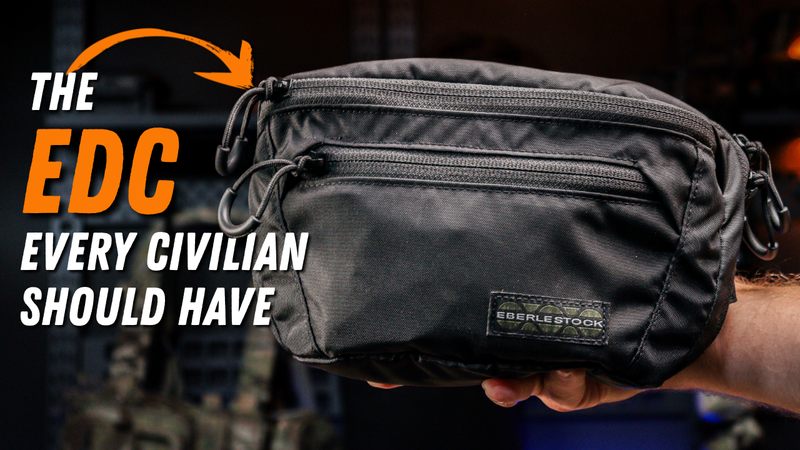
Your Carry Gun Is Not Enough: What Else Belongs in Your EDC Bag
EDC / EVERYDAY CARRY
Joe Giumarello | August 21, 2026 | 7 min read
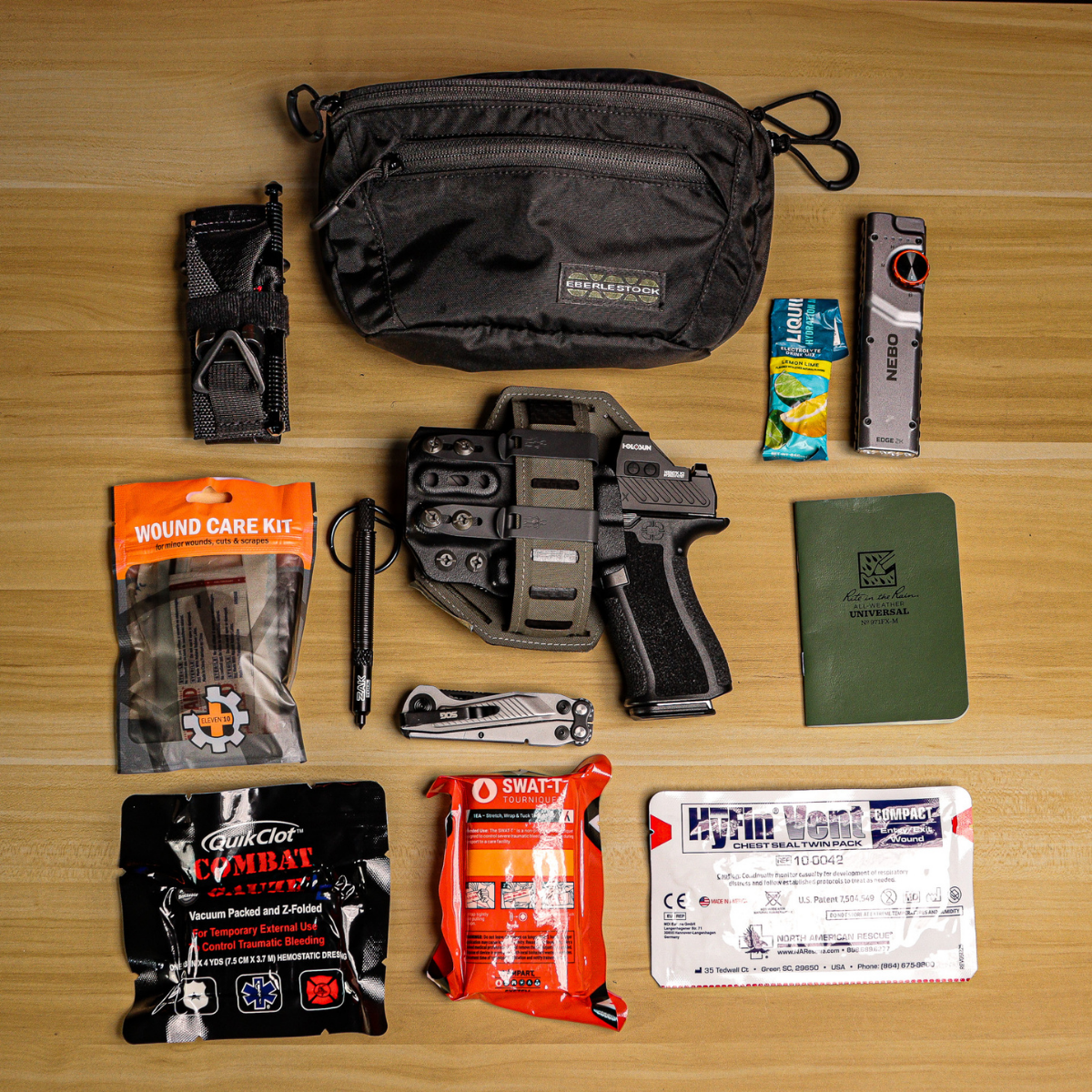
Fig. 1: Everything in this loadout, laid out
One of our main goals at Off Grid is making sure civilians are equipped to be their own first responder. That starts with your firearm, but it doesn't end there. If you're a responsible concealed carrier, your bag needs a secure way to carry that firearm, a dedicated light, real trauma medical gear, and a few tools you'll actually reach for, not just a holster and a spare mag.
Below is the exact loadout I run in my Eberlestock Bando Bag, item by item, and the reasoning behind each piece.
Watch the Breakdown
How Do You Carry a Firearm Safely in an EDC Bag?
The first thing to get right is securing your firearm inside the bag. One of the worst things that can happen is a negligent discharge, because you risk hurting yourself or someone around you. That means a dedicated holster or holster mount is not optional.
For me, that's a Tracer Tactical holster mount panel paired with a Tenicor holster. I run my Tenicor as an AIWB holster day to day, then move it straight into the bag when I want off-body carry. If your bag doesn't have a built-in mount, you can take a piece of adhesive Velcro, put it on the back of your holster, and mount it directly inside the bag yourself. That's exactly how loop-lined bags like the Eberlestock Bando Bag are built to work. The Bando even includes an integrated sleeve under the top flap specifically for carrying a tourniquet, on top of the holster mounting.
For my concealed carry pistol, I run a Shadow Systems CR920X with a Holosun 507K mounted on it.
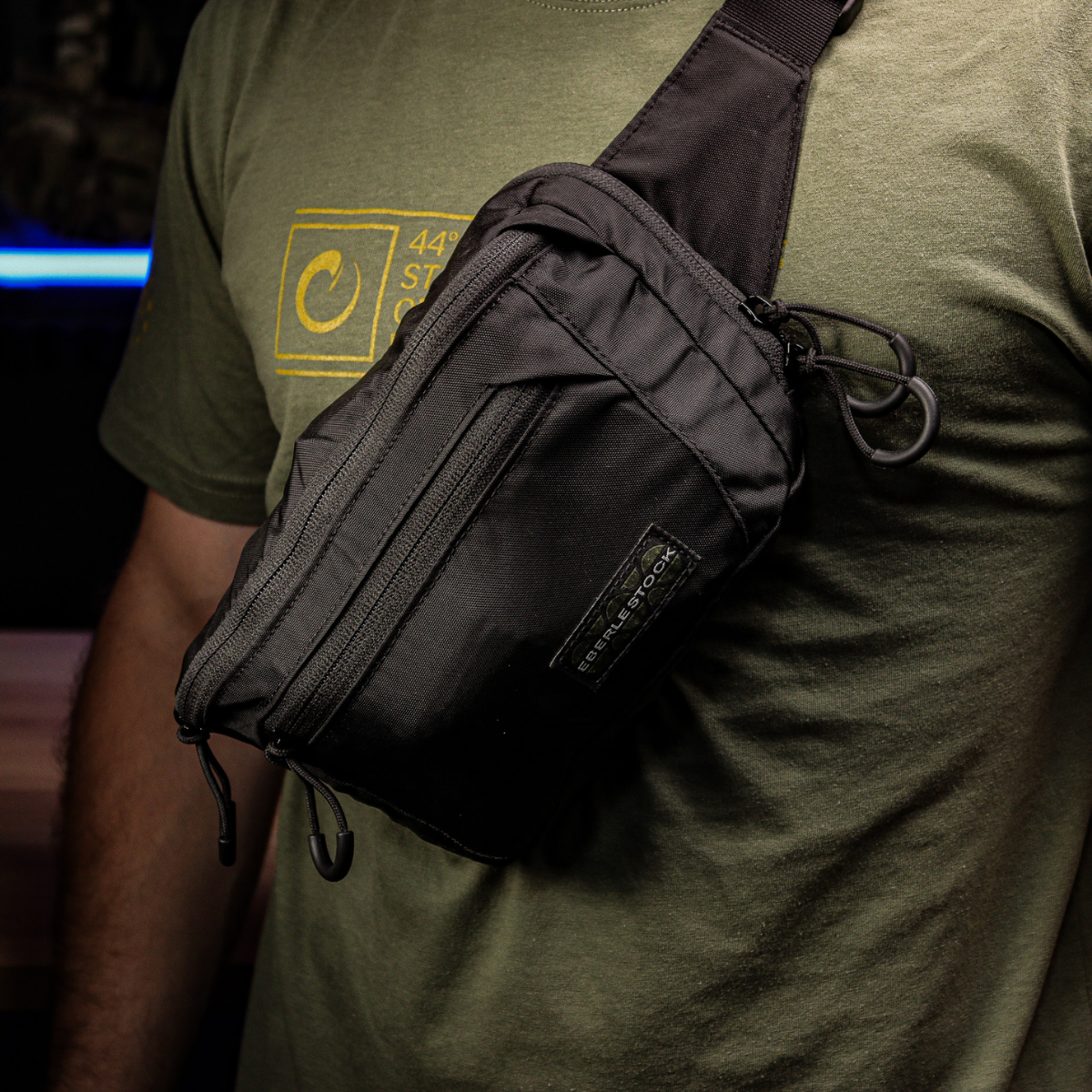
Fig. 2: Holster mounted inside |
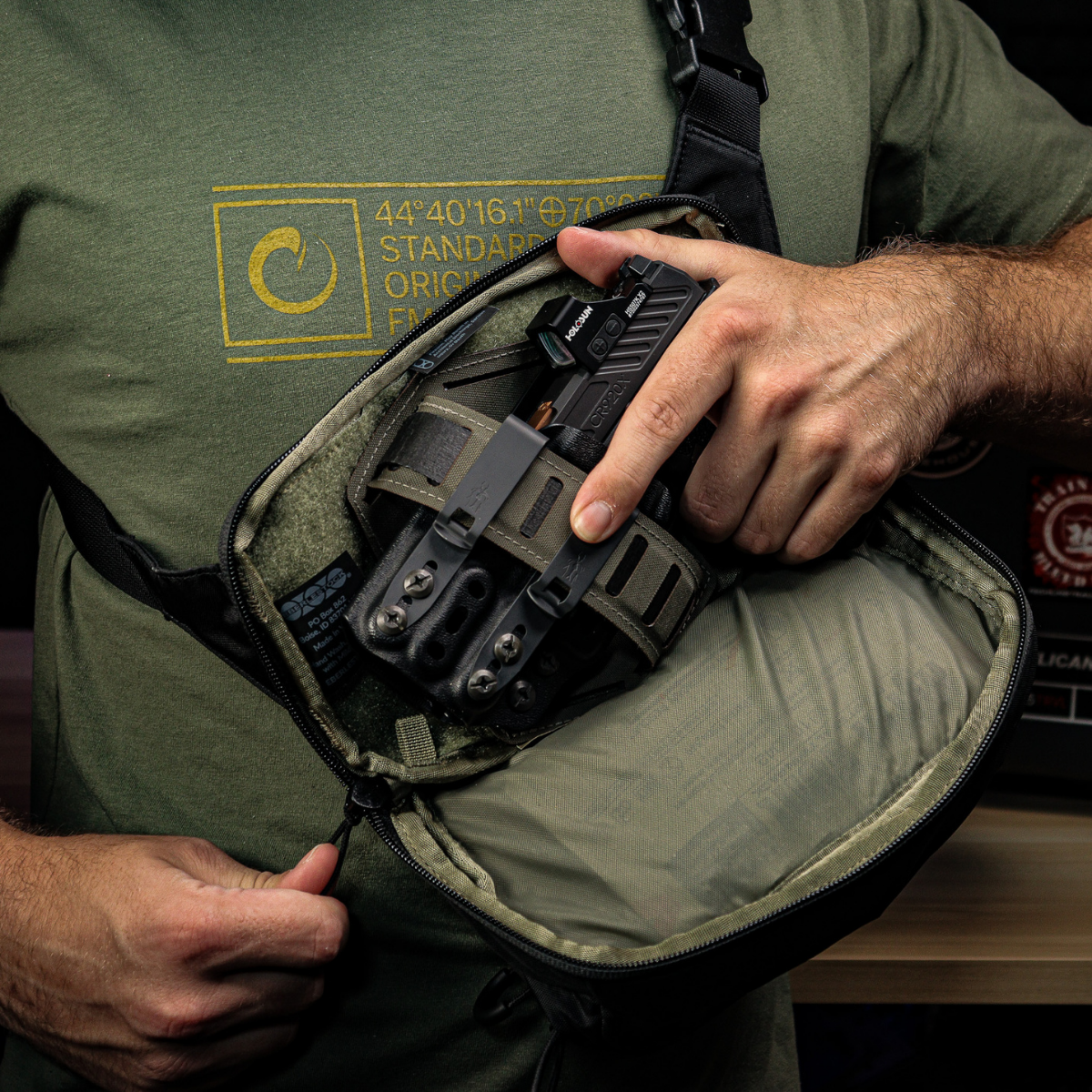
Fig. 3: Drawing from the mount |
Why Do You Need a Dedicated Flashlight, Not Just a Weapon Light?
A weapon-mounted light is great, but you don't want to be pointing your weapon, or a weapon-mounted light, at something or someone that isn't a threat. That's why a dedicated flashlight matters. I'm not a fan of flashlights loaded with controls and screens; I want something simple.
I run the Nebo Edge 2K for exactly this reason: a straightforward low/medium/high/turbo setting, USB-C rechargeable, and a strobe mode for the self-defense factor. A simple battery-status readout, a handful of dots instead of a screen, is easier to read at a glance than it sounds, and it means fewer trips to recharge. Hold the power button down and it kicks into a 2,000-lumen turbo mode.
What Medical Gear Should Be in Your EDC Bag?
If you're going to carry something that can make holes, you need to carry something that can plug holes. That's the one thing we preach more than anything else. The essentials to start with are a tourniquet, hemostatic gauze, and a pressure bandage.
Tourniquet
I run the SOF Tourniquet from TacMed Solutions rather than a C-A-T. Nothing against the C-A-T, we use it constantly, but the SOF folds down smaller, and I like the metal windlass. One adjustment I made after using it a while: I added a piece of Velcro One-Wrap around the tourniquet instead of a rubber band, because the rubber band would catch on the tourniquet's clip track when I tried to remove it. Finding those small hiccups in your own gear is exactly why you train with it before you need it.
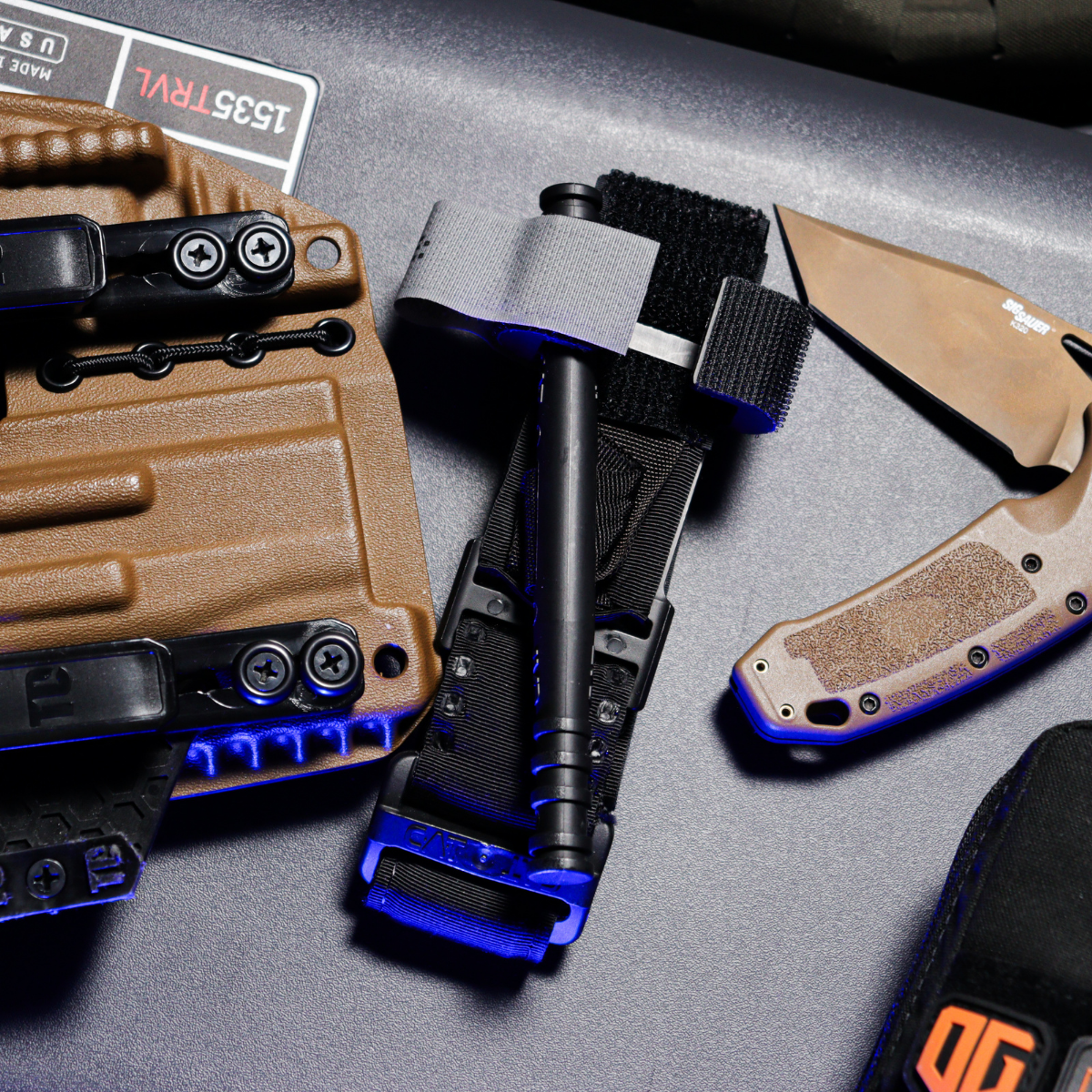
Fig. 4: Tourniquet and blade, staged and ready
Hemostatic Gauze
I carry QuikClot Combat Gauze, the 4-yard Z-folded roll. Hemostatic gauze coagulates blood significantly faster than plain wound-packing gauze, and with a gunshot wound you'll have more cavity to pack than you'd expect. It runs about $45, and it's worth every dollar. Stick with the standard Combat Gauze roll or the 4x4 pads. Skip anything marketed as an "adventure" line for this use case.
Pressure Bandage
I carry the SWAT-T Tourniquet here, mainly as a pressure bandage after packing a wound rather than as a primary tourniquet on an adult. It's genuinely more effective as a tourniquet for pediatric and K9 use, but it's incredibly versatile either way: pressure bandage, splint, sling, secondary tourniquet. At around $15, it's a solid value next to an emergency trauma dressing running close to $10 on its own. We've written a full breakdown of what makes the SWAT-T unique if you want the deeper comparison.
Gloves
Self-explanatory, for anything you shouldn't be touching directly. I'd go with a lighter-colored nitrile glove so you can actually see fluids like blood on them.
Wound Care Kit
One of the more recent additions to my bag is a small wound care kit from Eleven 10: 13 band-aids in different sizes, sterile gauze pads, alcohol prep pads, and frog tape. Realistically, this is the piece of "medical" you'll use more than anything else in the bag. It's just good for everyday cuts and scrapes.
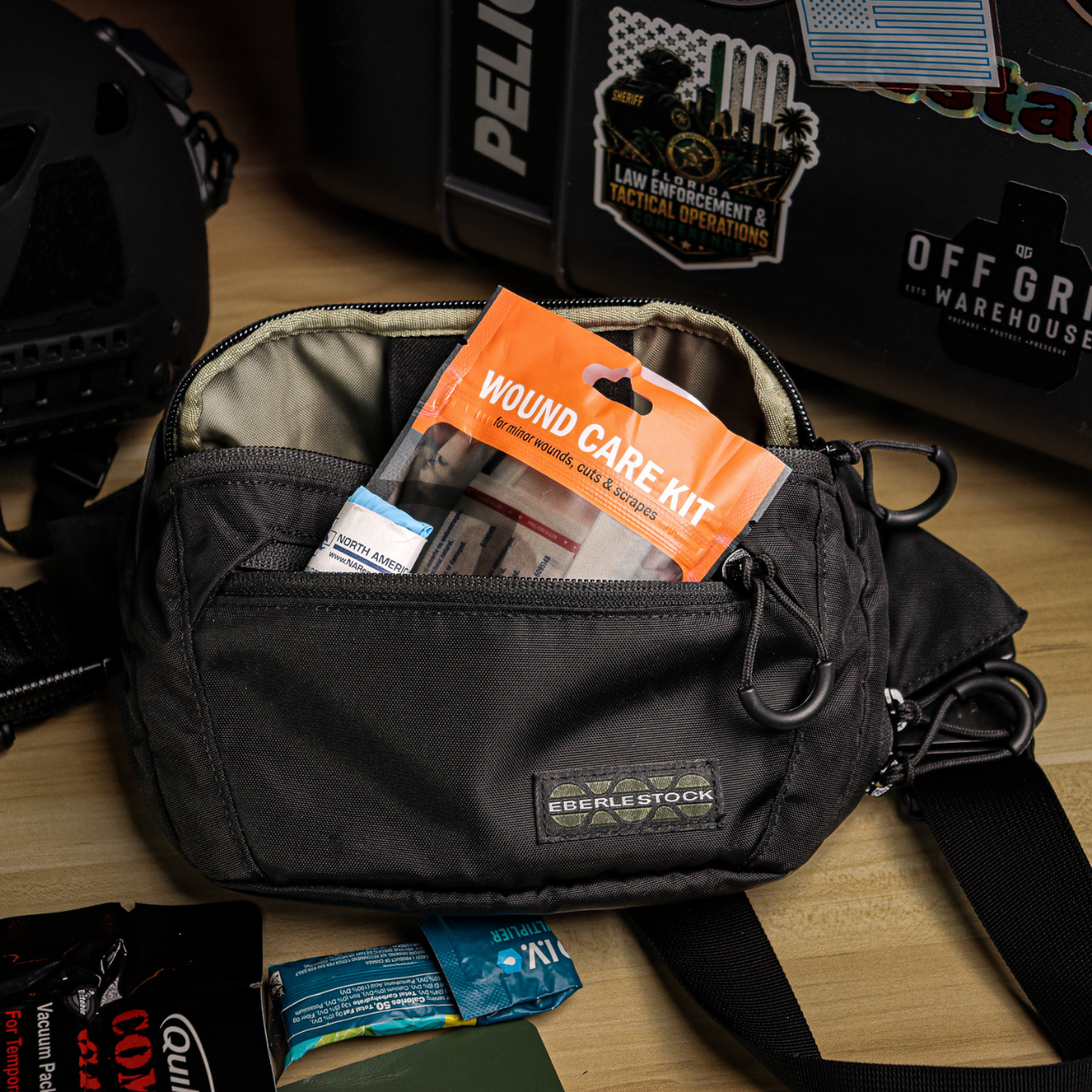
Fig. 5: Wound care kit, the piece you'll actually use most
Chest Seal
Last on the medical side is a compact HyFin Vent chest seal twin pack, covering entry and exit wounds. Chest seals get debated for their efficiency, but I still keep one in the bag. If you don't want to carry a dedicated seal, you can tear a mylar bag flat and use frog tape to make an improvised seal in a pinch, but a real chest seal takes up almost no space and removes the guesswork.
What Other Tools Are Worth Carrying?
Notebook and Pen
I carry a Rite in the Rain notebook, the stapled version, not spiral-bound, since a spiral can catch in a zipper. I write down a lot: trade show notes, general ideas, to-dos. Writing something down just holds more weight for me than typing it into a phone. That's my own opinion (you don't have to carry a notebook) but I like having one.
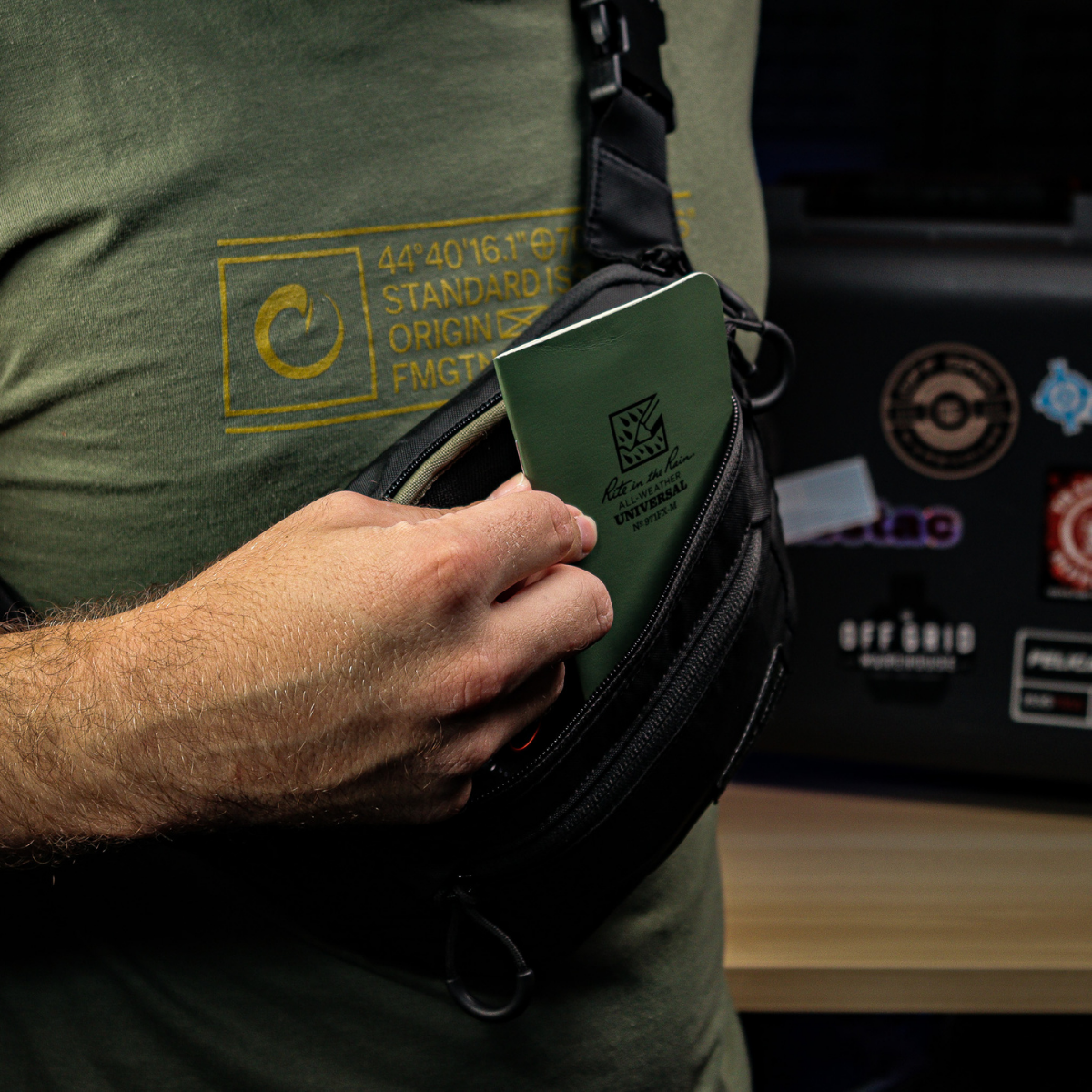
Fig. 6: Notebook, stapled not spiral
Window Punch Tool
I recently added this after assisting at an overturned van. I had a spring-loaded window breaker, and when I tried to use it on the front window, it wouldn't punch through. I moved to a back window, and when I finally launched the spring-loaded tip into the glass, my whole fist went through with it, cutting up my hand in the process. That's exactly why I switched to a pull-style window punch tool: you pull back into it rather than driving your hand forward into the glass. It's a little larger than a pen, but it's a genuinely good tool to have, and it's one small piece of gear that came directly out of a real call.
Multitool
I run a SOG Flash MT, an extremely compact multitool with needle-nose pliers, wire cutters, a knife blade, and a magnetic bit holder with a flathead and Phillips bit. That bit holder means I can maintain my own optic in the field, not just my gear. There's also a larger flathead with a bottle opener built in, but the Phillips and small flathead see the most use by far.
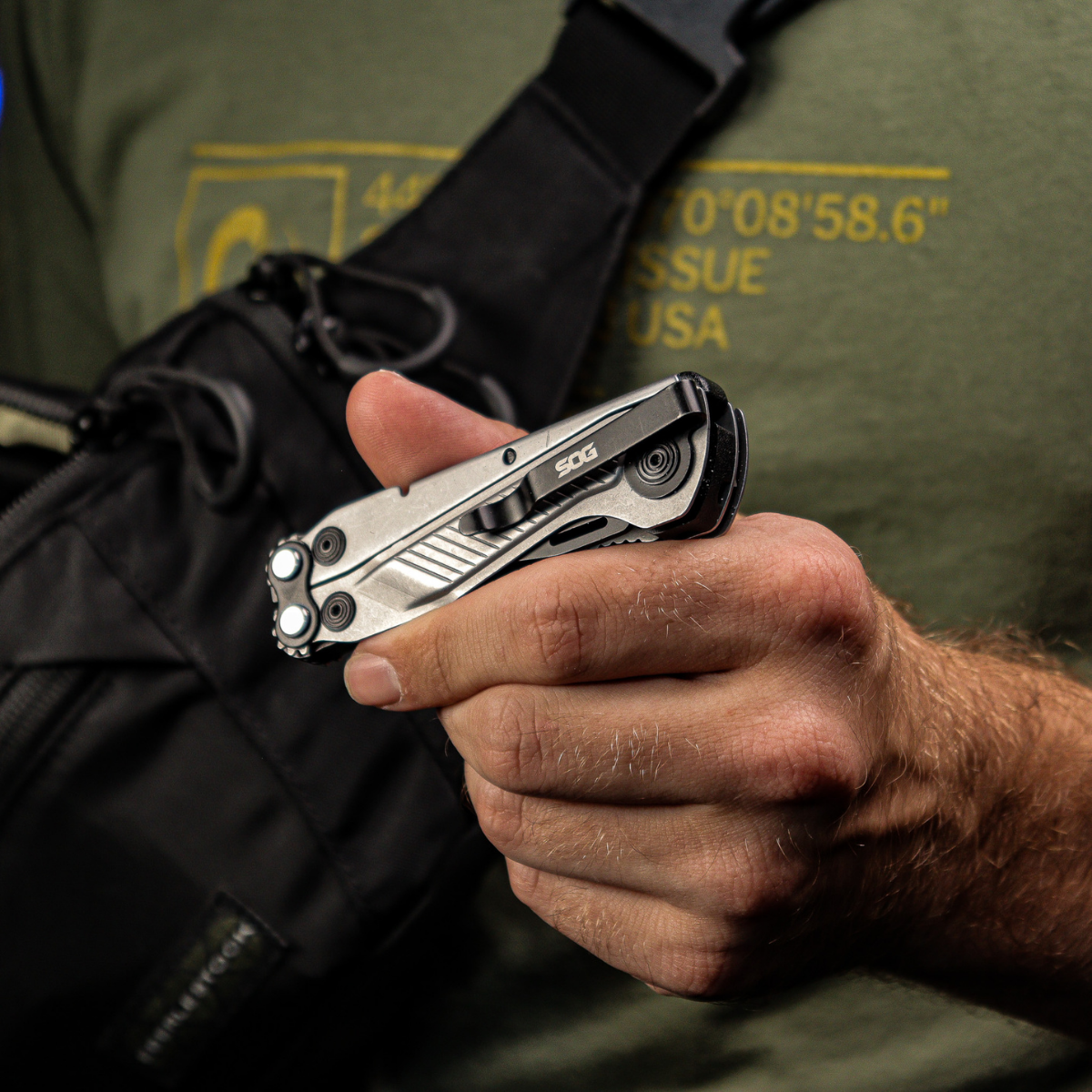
Fig. 7: SOG Flash MT, compact enough to forget it's there
This bag is dedicated to items that support each other. I still carry my phone, wallet, keys, and a separate pocket knife outside of it. This bag is just for this specific loadout. On the standard Bando there isn't much room left over once everything above is in; the Bando XL or a Vertx pack will give you a bit more breathing room if you want to add anything.
Why Should You Train With the Gear in Your Bag?
It's important that you're actually training out of the bag, not just carrying it. Whether you're at the range or dry firing at home, get reps drawing your firearm from the holster while it's mounted in the bag, in the exact position you carry it.
I'm a lefty, and I carry this bag cross-body. After training with it a while, I found I like orienting the zippers up toward my left clavicle, because it gives me a much better purchase on the firearm when I tear the bag open under pressure. That's a detail I only found by training with the setup, not by reading about it, which is exactly the point.
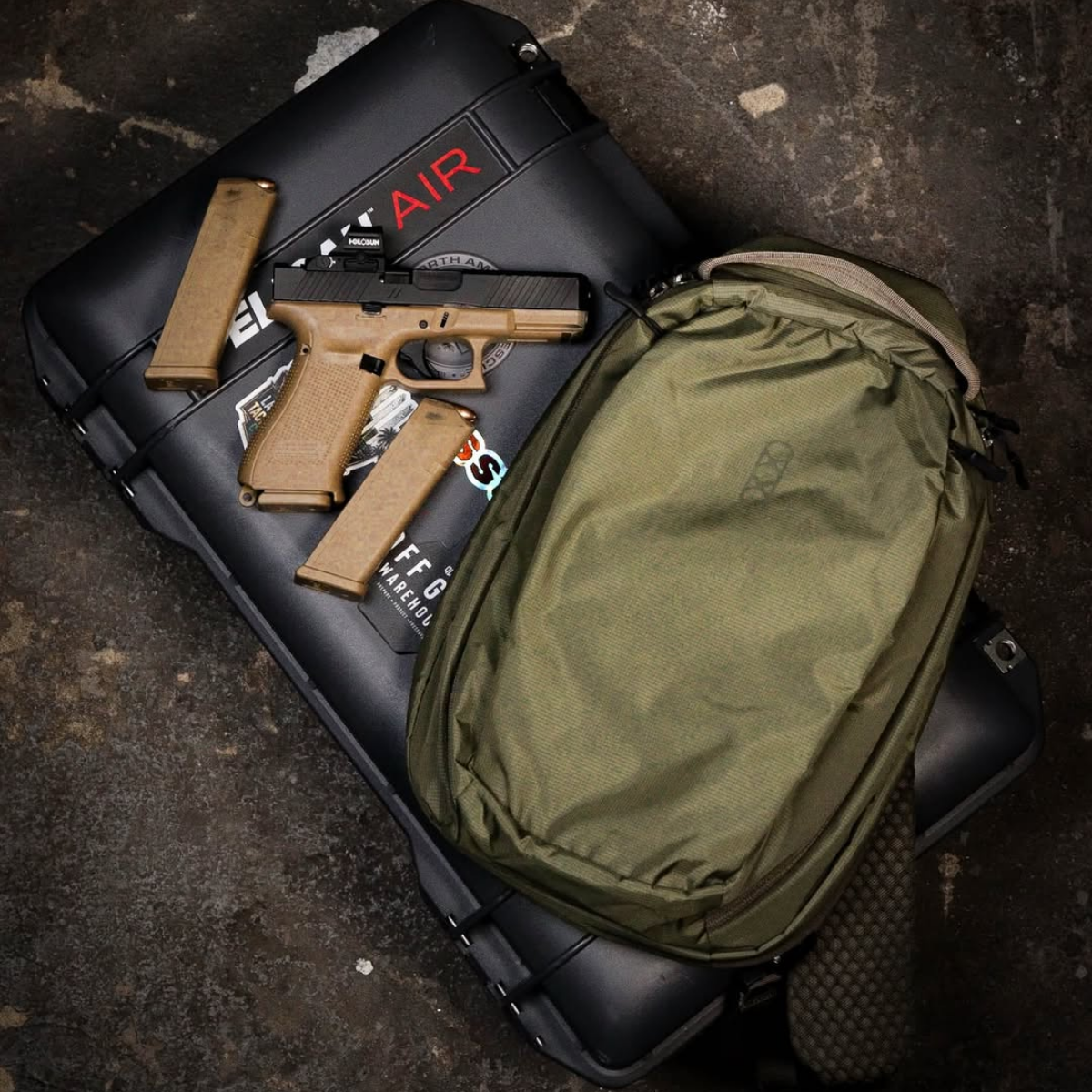
Fig. 8: Staged and ready for a range session
If you take one thing away from this: carry medical, and train with your gear. You can have the best gear in the world, but none of it means anything if you can't access it and don't know how to use it.
Frequently Asked Questions
What should I carry in my EDC bag besides my gun?
At minimum: a dedicated holster or holster mount to secure the firearm, a separate flashlight, a tourniquet, hemostatic gauze, a pressure bandage, gloves, and a small wound care kit. Beyond that, a notebook and a compact multitool round out a practical loadout.
Do I need a dedicated flashlight if I already have a weapon light?
Yes. A weapon-mounted light means pointing your firearm at whatever you're illuminating, which isn't appropriate for anything that isn't an active threat. A separate handheld flashlight covers everyday use without ever pointing your gun at something that doesn't warrant it.
What tourniquet is best for EDC?
There isn't a single right answer. The C-A-T and the SOF Tourniquet are both field-proven choices. The SOF folds down slightly smaller and uses a metal windlass, which is why some EDC carriers prefer it, but either is a legitimate choice as long as you train with it.
Why carry hemostatic gauze if I already have a tourniquet?
A tourniquet only addresses bleeding on a limb. Gunshot wounds to the torso, junctional areas, or anywhere a tourniquet can't be applied require packing with hemostatic gauze to control bleeding. The two tools cover different injuries.
Can the SWAT-T Tourniquet be used on children or pets?
Yes, the SWAT-T's stretch-based design makes it more effective than a windlass tourniquet on smaller or irregular limbs, which is why it's commonly recommended for pediatric and K9 use. It also functions as a pressure bandage, splint, or sling.
How often should I train with the gear in my EDC bag?
Regularly enough that drawing your firearm from the mounted holster and locating your medical gear is automatic. Treat range trips and dry-fire sessions at home as opportunities to train directly out of the bag you actually carry, not just from a range holster.
Joe Giumarello
Off Grid Warehouse
Joe is the owner of Off Grid Warehouse.
-
 PREPAREDNESS / FOOD SUPPLY Peter Rome | September 28, 2026 | 9 min read In February 2021, Winter …Sep 28th 2026
 -
 EDC / EVERYDAY CARRY Joe Giumarello | August 21, 2026 | 7 min read Fig. 1: Everything in this …Aug 21st 2026
 -
 Zach, the founder of Cana Provisions, went through DARC's Tactical Urban Sustainment Course as …May 11th 2026